

Short answer: hormonal breakouts are spots that follow changes in your hormones. Androgens, such as testosterone, signal your oil glands to make more sebum: the oily substance on your skin. More sebum means pores are more likely to become blocked. That’s why you might notice more spots during puberty, in the week before your period, after stopping the pill or during a stressful time. They often appear on your chin and jawline.
Your skin is clear, you finally feel like you’ve got things under control, and then spots appear on your chin again. Right on cue, a week before your period. Or in the middle of your busiest weeks. It’s not a coincidence. Your skin responds to your hormones, and they’re changing all the time. Here’s a straightforward look at how it works, why it affects some people more than others, and what you can do.
At a glance
- Hormones play a big part in how much sebum your skin makes.
- Everyone has androgens, including women. How sensitive your oil glands are to them varies from person to person.
- Many women notice their skin changes with their cycle, often around the chin and jawline.
- Stress, the pill and menopause can play a part too.
- Your body makes its own hormones using building blocks from what you eat.
What hormones do to your skin
Hormones are messengers in your body. They’re made in one place and travel through your blood to another, where they deliver a signal. They help regulate all sorts of things: growth, sleep, your cycle and your skin.
One group matters particularly for your skin: androgens. Testosterone is the best known. Many people think of it as a "male hormone", but women have it too, just in smaller amounts. Androgens signal your oil glands to make more sebum. Sebum is an oily substance that helps keep your skin supple. But too much of it can make a pore more likely to become blocked. And a blocked pore is where a spot begins. Read more in Androgens and your skin: what are they, and what do they do to your sebum?
This also helps explain why some people get more spots than others. It’s not just about how much of a hormone you have, but how sensitive your oil glands are to it. Two people with the same hormone levels can have very different skin. That sensitivity is partly inherited from your parents.
Want to know how a spot develops, step by step? Read Spots and your skin from within.
Puberty: when it all begins
During puberty, your body starts making a lot more hormones, including androgens. Your oil glands get bigger and more active. According to Thuisarts, almost everyone gets spots during puberty, though some get more than others. Boys often get more severe spots because they produce more androgens.
For many people, their skin gets clearer after puberty. But not for everyone. Many adults, especially women, continue to get spots well beyond their twenties, or experience them for the first time later in life.
Your cycle: why your skin changes with it
If you have a menstrual cycle, your hormones change in a regular pattern each month. Your skin can change with them. A cycle lasts around four weeks on average. Broadly speaking, here’s what happens:
Your cycle and your skin (based on a cycle of around 28 days)
- Week 1: your period
- Clearer
- Week 2: after your period
- Often at its best
- Week 3: after ovulation
- More sebum
- Week 4: just before your period
- Often more breakouts
Every cycle is different. This is a general picture, not a fixed rule.
Your cycle mainly involves two hormones: oestrogen and progesterone. Oestrogen rises in the first half, and many women notice their skin looks clearer then. After ovulation, progesterone rises and your oil glands often make more sebum.
In the week before your period, oestrogen and progesterone both fall. Androgens stay roughly the same, so their influence becomes relatively stronger. That’s when many women notice spots appearing.
Those spots often appear on your chin and along your jawline. They’re usually deeper, tender bumps that stick around for a few days. If you recognise the pattern, that’s actually useful: it means you can see when these changes tend to happen.

The pill, and coming off it
The combined contraceptive pill contains hormones that reduce the influence of androgens on your skin. That’s why many women notice clearer skin while taking it. According to Thuisarts, GPs sometimes prescribe the pill for this reason too.
The reverse can happen when you stop. Your body takes over regulating its own hormones again. Many women notice changes in their skin in the following months, sometimes with more spots than they’re used to. Often, it’s a transition period. Your body needs time to find its own rhythm again.
Pregnancy and menopause
Big life changes can show up in your skin too. Hormones fluctuate considerably during pregnancy, and some women notice a difference in their skin. Be careful about what you use during this time: many products and supplements containing vitamin A aren’t suitable. Clear+ contains vitamin A too. Always speak to your midwife or GP first.
Around menopause, oestrogen gradually declines. Androgens decline less quickly, so their influence becomes relatively stronger again. That’s why some women start getting spots in their fifties, even after years without them.
Stress: the factor you might overlook
When you think about hormones and your skin, your cycle might come to mind first. But stress can play a big part too. When you’re stressed, your body makes more of the stress hormone cortisol. That can also stimulate your oil glands. You might sleep less well, eat differently and touch your face more often too.
That’s why many people notice more breakouts during busy periods: exams, a deadline or a move. Stress isn’t the only cause, but it can contribute. And it works both ways: breakouts can be stressful in themselves.
What about men?
Men don’t have a monthly cycle, but hormones affect their skin too. They produce more androgens than women and often have oilier skin as a result. Their hormone levels are more stable, though, so a regular monthly pattern is less common. Stress, sleep and shaving can all play a part.
What you can do
You can’t switch your hormones off. But you can be thoughtful about how you care for your skin:
- Get to know your pattern. Track your skin and where you are in your cycle for a few months. One line a week is enough. It can help you know what to expect, so a week of breakouts feels less surprising.
- Be gentle when you’re breaking out. It’s tempting to scrub more or try new products that week. Stick with a gentle cleanser, a light moisturiser and sunscreen.
- Leave spots alone. You can’t squeeze those deep bumps on your chin without risking damage. Leave them be, or use a patch to help you avoid touching them.
- Make sleep a priority. Especially when life gets busy. A few weeks of better sleep often does more than a new product.
- Compare like with like. Compare your skin in the week before your period with the same week a month later, not with its best week.
Where diet and nutrients fit in
Your body makes its own hormones. To do that, it needs building blocks from the food you eat. Some of these have a direct role in hormone production.
Vitamin B5, also known as pantothenic acid, is one of them. Pantothenic acid contributes to normal synthesis and metabolism of steroid hormones, vitamin D and some neurotransmitters. In everyday terms, your body uses vitamin B5 to make and process hormones, including those involved in your cycle. It’s found in small amounts in almost everything you eat.
Zinc is another example. Zinc contributes to the maintenance of normal testosterone levels in the blood. Zinc also contributes to the maintenance of normal skin. You’ll find it in meat, fish, cheese, nuts and wholemeal bread. Your body doesn’t store large amounts, so you need it every day.
You might be thinking: if it’s hormonal, is there anything I can do? To a degree, that’s true. The fluctuations in your cycle are a normal part of it. But the building blocks your body gets each day matter too. And that’s something you can influence.
The tricky part is that you need those building blocks every day. Including the week when you’re too busy to eat as well as you’d like, and the week before your period.
Where Clear+ fits in
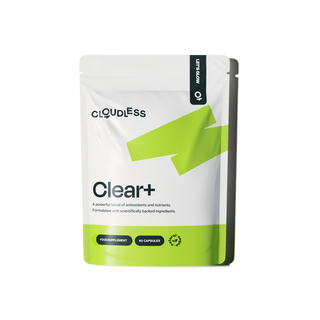
That’s why we created Clear+. Vitamin B5 is a key ingredient, with 500 mg per day. It also contains zinc, vitamin A and spearmint: the mint you might know from mint tea. Ten ingredients in total, in two capsules a day. A simple way to keep up that daily routine without having to think about it.
Your hormones go through their cycle every month. So take Clear+ every day, including your good weeks. See how you feel after a few full cycles, or around 90 days. For more on the timing, read How long does it take to notice a difference in your skin? And if Clear+ suits you, you can keep taking it: your body needs those building blocks every day, not just for the first three months.
Want to know exactly what’s in Clear+, and why we chose those amounts? Read What’s in Clear+, and why these amounts?
I thought it was just another sales pitch. But it works. … I’ve just ordered for the 2nd time.
Anne L.
When to see your GP
Hormonal spots are very common. But sometimes there’s more going on. See your GP if:
- your cycle is very irregular or you often miss periods;
- you also have a lot of hair growth in places such as your chin, upper lip or stomach;
- you suddenly develop lots of spots as an adult, when you’ve never had them before;
- you have lots of painful, deep spots or they leave scars;
- it’s having a significant impact on your daily life or how you feel.
Sometimes an underlying hormonal condition, such as PCOS, is involved. PCOS affects how your ovaries work and often causes an irregular cycle. Your GP can look into it and discuss what’s right for you.
More about Clear+
Clear+ at a glance
- Ten ingredients in two capsules a day, including 500 mg of vitamin B5
- The same daily routine, even in the week before your period
- Rated "Excellent" on Trustpilot
- 90-day satisfaction guarantee on your first order
Frequently asked questions
What are hormonal breakouts?
Spots that follow changes in your hormones. They often appear at predictable times, such as the week before your period, usually on your chin and jawline. They’re often deeper, tender bumps.
Why do I get spots before my period?
In the week before your period, oestrogen and progesterone fall. Androgens stay roughly the same, so their influence becomes relatively stronger. Your oil glands often make more sebum then, making pores more likely to become blocked.
Why have I suddenly started getting spots as an adult?
There are lots of possible reasons: coming off the pill, stress, menopause or a new product. If you suddenly get lots of spots, or you also have an irregular cycle or a lot of hair growth, see your GP.
Can stress cause spots?
Stress isn’t the only cause, but it often plays a part. When you’re stressed, you make more cortisol, might sleep less well and may touch your face more often. Many people notice the difference in their skin.
Can I take Clear+ if I’m on the pill?
Yes. Clear+ is a supplement containing vitamins, minerals and plant extracts, and you can take it alongside the pill. Don’t take another supplement containing zinc or vitamin A at the same time. If you’re unsure about your situation, ask your pharmacist.
How long should I take Clear+?
See how you feel after around 90 days, so you can compare a few full cycles. If it suits you, you can keep taking it. Your body needs those building blocks every day, which is why many people make Clear+ a long-term part of their morning routine.
What if I’m not happy with it?
You’ll get your money back. With your first order, take Clear+ every day for 90 days, then let us know within 10 days. That gives you time to try it across a few full cycles. You’ll find all the terms in our refund policy.
This article is for general information and is not medical advice. If your skin or your cycle is causing you significant problems, see your GP. Clear+ is a food supplement. A food supplement is not a substitute for a varied, balanced diet and a healthy lifestyle.
Sources
- Thuisarts.nl (NHG). I have spots (acne). What can I do? thuisarts.nl
- Thuisarts.nl (NHG). I have acne and my GP has prescribed medication. thuisarts.nl
- European Commission. EU Register of nutrition and health claims made on foods. ec.europa.eu
- EFSA NDA Panel (2014). Scientific Opinion on Dietary Reference Values for pantothenic acid. EFSA Journal 12(2):3581.
 Excellent on Trustpilot