

Short answer: breakouts on your chin and jawline are often linked to hormones. Androgens, such as testosterone, can make the oil glands there more active. That’s why spots often appear in the week before your period, after coming off the pill or during stressful times. Things that touch your chin, like your hands, your phone or a razor, can play a part too. What helps? Leave spots alone, keep your skincare routine simple and give your body the nutrients your skin and hormones need each day.
Your forehead is clear. So are your cheeks. But spots keep coming back on your chin and along your jawline. They’re often deeper and more painful than other spots, and tend to show up at the same time each month. That’s no coincidence. The lower part of your face responds differently from the rest. Here’s why, what you can do and when it’s worth seeing your GP.
At a glance
- Chin and jawline breakouts are often linked to hormones, especially androgens.
- For women, they often appear in the week before a period.
- Touching your face, your phone, shaving and certain products can also play a part.
- Leaving spots alone and keeping your routine simple can help most.
- Zinc, vitamin B5 and a consistent daily routine support your skin from within.
Why your chin and jawline?
Your skin has oil glands that produce sebum, the oily layer that helps keep it supple. When they produce too much, pores can clog more easily, leading to spots.
Hormones, particularly androgens, influence your oil glands. Androgens include hormones such as testosterone. Men have more of them, but women have them too. The oil glands on your chin, jawline and neck are especially sensitive to these hormones. Think of where men grow beards: it’s the same area.
That’s why doctors often say that spots on the lower part of your face, particularly in adult women, often have a hormonal component. It doesn’t mean your hormones are ‘wrong’. It means the skin there responds more strongly to normal hormonal fluctuations. Read more in Androgens and your skin.
Your cycle and your chin
Many women notice it every month: a few days before their period, another spot appears on their chin. It’s linked to the way hormones change throughout your cycle.
- First half
- Oestrogen rises. Your skin is often at its clearest.
- Around ovulation
- Oestrogen peaks, then falls again.
- Final week
- Oestrogen and progesterone fall. Androgens have relatively more influence, and your skin often produces more oil.
- Your period
- This is when you see the result: spots that have been developing for a while.
A spot can develop for weeks before you see it. So a spot that appears in the week before your period started forming earlier. That’s why it helps to look for changes over a few months, rather than week by week.
Other times when your hormones change and your chin may be more prone to breakouts include coming off the pill, after pregnancy and around menopause. You can also read Breakouts after coming off the pill.
Stress: the overlooked factor
Stress affects your hormones too. When you’re stressed, your body produces more cortisol. Your adrenal glands also produce a little more androgen. You may sleep less well, eat less regularly and touch your face more often. It’s no wonder many people notice chin breakouts during exams, a busy spell at work or a difficult time at home.
What touches your chin?
Hormones aren’t the whole story. Your chin is an area you touch often, and it comes into contact with plenty of other things. Watch out for these:
- Your hands. Do you rest your chin on your hand while working on your laptop or reading? That can press dirt and oil into your pores.
- Your phone. When you make a call, the screen presses against your jaw and chin. Clean your phone regularly or use earphones.
- Your pillowcase. Your face rests on it every night. Change it once or twice a week.
- Hair products. Oil, gel or dry shampoo can end up on the skin along your jawline.
- Heavy creams. Rich creams and oil-based make-up can clog pores on the lower part of your face more easily. Choose oil-free products.
- Scarves and collars. In winter, they can rub against your chin and jaw.

What about men?
Men often get spots on their chin, jaw and neck too. That’s where facial hair grows and where oil glands are most active. Men also have more androgens, and often have oilier skin as a result.
For men, shaving can make a big difference. It can irritate your skin, while ingrown hairs can cause red bumps that look like spots. A few tips:
- Shave in the direction your hair grows, not against it.
- Use a sharp blade and rinse it as you go.
- Use shaving gel, followed by a light, alcohol-free moisturiser.
- If it’s a frequent problem, try a trimmer so you’re not shaving right down to the skin.
Read more in Spots in men.
What you can do
Chin spots are often deeper than other spots. It’s tempting to pick at them, but that can make them worse. Here’s what helps:
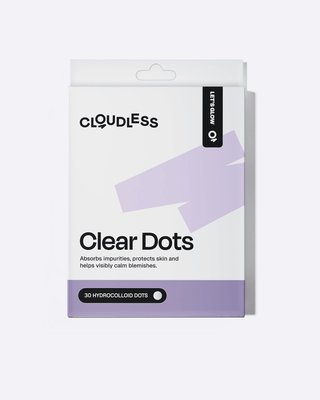
- Leave them alone. You can’t squeeze a deep chin spot without damaging your skin. You may push the inflammation deeper and increase the chance of a mark or scar. A pimple patch can help you resist picking.
- Keep your routine simple. Use a gentle cleanser, a light oil-free moisturiser and sunscreen. Scrubbing won’t help.
- Track your cycle. Note when you have your period and when your chin breaks out. You may start to see a pattern.
- Pay attention to sleep and stress. It sounds boring, but you may notice the effects right here.
- Give it time. It may take weeks or months to see the effects of what you do now. Give a new routine 90 days before you judge it.
From within: nutrients for your skin and hormones
Because chin breakouts are often linked to hormones, part of the picture is what happens inside your body. Creams work on the outside, but your body also needs nutrients to support your skin and hormones.
- Zinc. Zinc contributes to the maintenance of normal testosterone levels in the blood. Zinc contributes to the maintenance of normal skin.
- Vitamin B5. Also called pantothenic acid. Pantothenic acid contributes to normal synthesis and metabolism of steroid hormones, vitamin D and some neurotransmitters. Steroid hormones include sex hormones.
- Vitamin A. Vitamin A contributes to the maintenance of normal skin.
You can get zinc from meat, fish, cheese, wholegrains and nuts. But if you eat little meat, or life is busy and you don’t eat a varied diet every day, you may not always get enough.
The product works well for me. My skin has become a lot calmer. I mainly struggle with hormonal bumps and spots, and I have a lot fewer of them. I’ve been using it for about 6 months now, but it does take a bit of time. After 3 months, I noticed a real difference. I also get far fewer spots during the week of my period than I used to.
Kaylee v. B. · 20 April 2026
Where Clear+ fits in
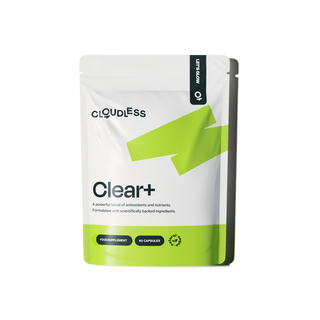
Clear+ is made for blemish-prone skin affected by hormonal fluctuations. Two capsules a day provide ten ingredients, with zinc, vitamin A and vitamin B5 at the core:
- Zinc
- 20 mg, as zinc citrate
- Vitamin B5
- 500 mg pantothenic acid
- Vitamin A
- 900 µg
- Spearmint
- 200 mg spearmint
- Also included
- Vitamins C, D3 and E, selenium, copper and black pepper extract (BioPerine)
For what the research does and doesn’t show about spearmint, read Spearmint and blemish-prone skin.
As Kaylee says, it takes a bit of time. That’s why we recommend giving it 90 days. If it’s your first time ordering Clear+, take it every day for 90 days. If you’re not happy after that, contact us between day 90 and day 100 and return all the pouches. We’ll refund your purchase, minus the cost of the return label.
And if it’s going well? Keep it up. Your hormones fluctuate every month, and your skin makes new cells every day. Those cells need nutrients every day too. With a subscription, your next pouch arrives when you need it, with 20% off. You can skip or cancel at any time.
When to see your GP
Not every bump on your chin is an ordinary spot. See your GP if:
- you have lots of deep, painful spots, or they leave scars;
- you mainly have small red bumps and flaky skin around your mouth and chin, especially after using heavy creams or steroid creams. This could be perioral dermatitis, which needs a different approach;
- you also have irregular periods or more hair growth on your chin, upper lip or stomach. This could be a sign of PCOS;
- your skin is mainly red and feels hot, with bumps on your cheeks and nose. This could be rosacea;
- it’s seriously affecting your confidence.
More about Clear+
Clear+ at a glance
- Zinc, vitamin A and vitamin B5 at the core, with spearmint
- For skin affected by hormonal fluctuations
- Two capsules a day, vegan, suitable from age 12
- 90-day satisfaction guarantee on your first order
Frequently asked questions
What do spots on your chin mean?
Spots on your chin and jawline are often linked to hormones, especially androgens. The oil glands there are particularly sensitive to those hormones. Touching your face, your phone and shaving can play a part too.
Why do I get chin spots before my period?
In the week before your period, oestrogen and progesterone levels fall. Androgens then have relatively more influence, and your skin often produces more oil. You may notice this first on your chin and jawline.
Does face mapping work?
Face mapping claims that each area of your face corresponds to an organ. There’s no evidence for that. What is true is that the lower part of your face is more sensitive to hormones than your forehead.
Can my phone cause chin spots?
Your phone can play a part. During calls, the screen presses oil and dirt against your skin. Clean your screen regularly or use earphones for calls.
Are jawline spots worse than other spots?
They’re often deeper and more painful. That’s why squeezing them isn’t a good idea. If you have lots of deep, painful spots, see your GP.
What if I’m not happy?
You can get your money back. On your first order, take Clear+ every day for 90 days, then contact us between day 90 and day 100. You’ll find all the terms in our refund policy.
This article is for general information and is not medical advice. If your skin or your cycle is causing you concern, see your GP. Clear+ is a food supplement. A food supplement is not a substitute for a varied, balanced diet and a healthy lifestyle.
Sources
- Thuisarts.nl (NHG). I have spots (acne). What can I do? thuisarts.nl
- Thuisarts.nl (NHG). Polycystic ovary syndrome (PCOS). thuisarts.nl
- Thuisarts.nl (NHG). Rosacea. thuisarts.nl
- Voedingscentrum. Encyclopaedia: zinc. voedingscentrum.nl
- European Commission. EU Register of nutrition and health claims made on foods. ec.europa.eu

 Excellent on Trustpilot