


Short answer: collagen is the protein that gives your skin, bones and tendons their strength. When you take collagen, your body digests it like any other protein, breaking it into small pieces that it absorbs and uses where needed. Your body also needs vitamin C to make its own collagen. If you're choosing a collagen supplement, check the amount (often 2.5 to 10 grams a day), whether it's hydrolysed, where it comes from, whether it contains vitamin C and whether it's tested.
Collagen is everywhere. In powders, shots, gummies, coffee creamers and even sweets. Some people swear by it; others think it's a waste of money. But what actually is collagen? What happens when you take it? And how do you tell all those products apart? This article breaks it down in plain English, so you can make your own choice.
At a glance
- Collagen is the most abundant protein in your body.
- As you get older, your body makes it more slowly.
- Your body digests the collagen you take into small pieces that it absorbs.
- Without vitamin C, your body can't make strong collagen.
- Check the amount, form, source, vitamin C and testing.
What is collagen?
Collagen is a protein. It's the most abundant protein in your body. You'll find it in your skin, bones, tendons, cartilage and blood vessels. Think of it as your body's scaffolding: long, strong fibres that help hold everything in place.
There are different types of collagen. The main ones are:
- Type I: the most common type, found in your skin, bones and tendons, among other places.
- Type II: found mainly in your cartilage.
- Type III: often found alongside type I, including in your skin and blood vessels.
In your skin, collagen is mainly found in the middle layer, beneath the outer layer you can see. There, it forms a network of fibres that gives your skin its firmness.
Why collagen changes as you get older
Your body is constantly making new collagen and breaking down old collagen. When you're young, it makes new collagen quickly. That slows down as you get older. As a result, your skin becomes thinner and feels less firm. It's a normal part of ageing, and it happens at a different pace for everyone.
A few things can speed it up. The biggest is the sun: UV light damages the collagen fibres in your skin. Smoking, too little sleep and a lot of sugar also play a part. That's why sunscreen is one of the best things you can do for your skin, at any age.
What happens when you take collagen?
It's a question a lot of people have. Does collagen from a drink somehow get "stuck onto" your skin? No, that's not how it works. Collagen is a protein, and your body digests it first, just like any other protein.
In your stomach and intestines, it's broken down into small pieces: individual amino acids and short chains called peptides. Your body absorbs these into your bloodstream, then uses them as building blocks where they're needed.
Collagen has a distinctive make-up. It contains a lot of certain amino acids, including glycine, proline and hydroxyproline. Your body needs these to make new collagen of its own. A collagen supplement is a concentrated source of those building blocks.
No collagen without vitamin C
Building blocks alone aren't enough. Your body needs vitamin C to turn amino acids into strong collagen fibres. Vitamin C contributes to normal collagen formation for the normal function of skin. Without vitamin C, your body simply can't do it, however many building blocks you get.
So it's worth checking for vitamin C when you're looking at collagen. You'll find it in fruit and vegetables such as kiwi, oranges, peppers and broccoli. But many collagen powders don't contain vitamin C. That leaves you relying on what you happen to eat that day.

Can you get collagen from food?
Yes, but for most people, it's not on the menu very often. Collagen is mainly found in parts of animals that we don't eat much these days:
- Bone broth that's been simmered for hours.
- Skin from chicken and fish.
- Gelatine: essentially cooked collagen. You'll find it in puddings and some sweets.
In the past, people ate the whole animal and got collagen as part of their diet. Now, most people mainly eat chicken breast and other lean meats, which contain little collagen. That's one reason collagen supplements have become so popular.
What should you look for in a collagen supplement?
There are hundreds of collagen products, and they vary a lot. This checklist helps you spot the differences:
Checklist: choosing a collagen supplement
- How many grams of collagen a day?
- Often 2.5 to 10 g
- Is it hydrolysed?
- Dissolves more easily
- Where does it come from?
- Beef, fish or pork
- Does it contain vitamin C?
- For collagen formation
- Is every amount listed on the label?
- No "blend"
- Is it tested for heavy metals?
- Independent lab
Gummies and capsules often contain very little collagen per serving. Always check the number of grams.
A little more on a few of those points:
- The amount. Collagen amounts are measured in grams, not milligrams. A gummy or capsule often contains just a fraction of a gram. That makes powder the most practical option for larger amounts.
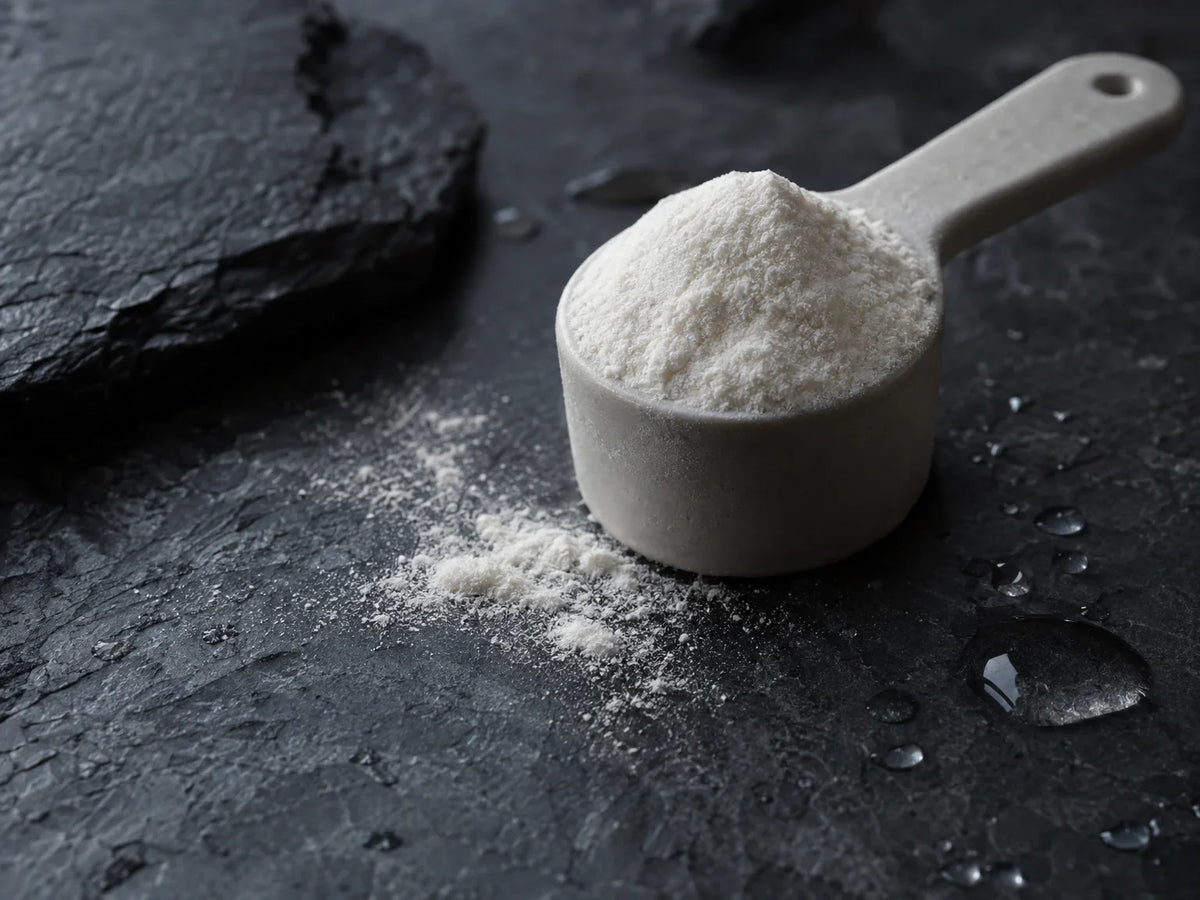
- Hydrolysed. This means the long protein chains have already been broken into smaller pieces. The powder dissolves well in cold water without lumps, and you can barely taste it. Ordinary gelatine only dissolves in warm water and sets as it cools.
- The source. Beef and fish collagen are both mainly type I. Both are widely used. If you have a fish allergy, don't choose fish collagen. If you're vegetarian or vegan, collagen isn't for you: it always comes from animals.
- Testing. Because collagen comes from animals, it's important that it's tested for heavy metals and other unwanted substances. A good brand has this done independently.
Powder, capsules, shots or gummies?
Collagen comes in all sorts of forms. Your choice matters more than you might think, especially when it comes to how much you get:
- Powder. The easiest way to get grams of collagen. Mix it into water, a smoothie or yoghurt. The downside: you have to prepare it.
- Capsules. Convenient, but a single capsule holds only about half a gram. To get 8 grams of collagen, you'd need to take around sixteen capsules a day.
- Shots. Small bottles, often containing a few grams of collagen. More expensive per gram, with a lot of packaging.
- Gummies. Tasty, but often with sugar and little collagen per gummy.
For most people, powder is the most practical and affordable choice. Just pick one you like the taste of, so you'll want to keep taking it.
Does vegan collagen exist?
No, not really. Collagen always comes from animals. Products labelled "vegan collagen" usually contain no collagen, but a mix of vitamins and plant extracts. That might suit you, but it isn't the same as collagen. So read the label carefully.
How long before you notice anything?
Your skin, hair and nails grow slowly. The outer layer of your skin renews itself in around four weeks or longer. Your hair grows about a centimetre a month, and a nail takes months to grow out completely. So give a collagen routine 2 to 3 months before you judge it, rather than a few weeks.
And after that? Your body keeps making and breaking down collagen every day. So you need those building blocks every day, not just for the first three months. Think of it like brushing your teeth: you do it every day because it's needed every day. Read more in How long does it take to see a difference in your skin?
Where Glow+ fits in
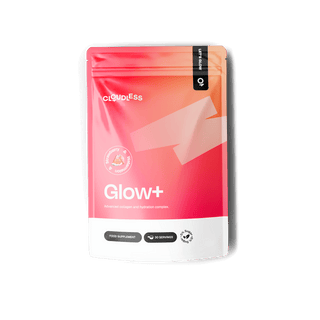
We followed this exact checklist when we made Glow+. Each scoop contains 8,000 mg of hydrolysed type I bovine collagen: 8 grams, at the higher end of the usual range. It also contains 500 mg of vitamin C, so you don't have to get it separately. Glow+ also contains zinc, MSM, hyaluronic acid and gotu kola. Zinc contributes to the maintenance of normal hair, normal nails and normal skin.
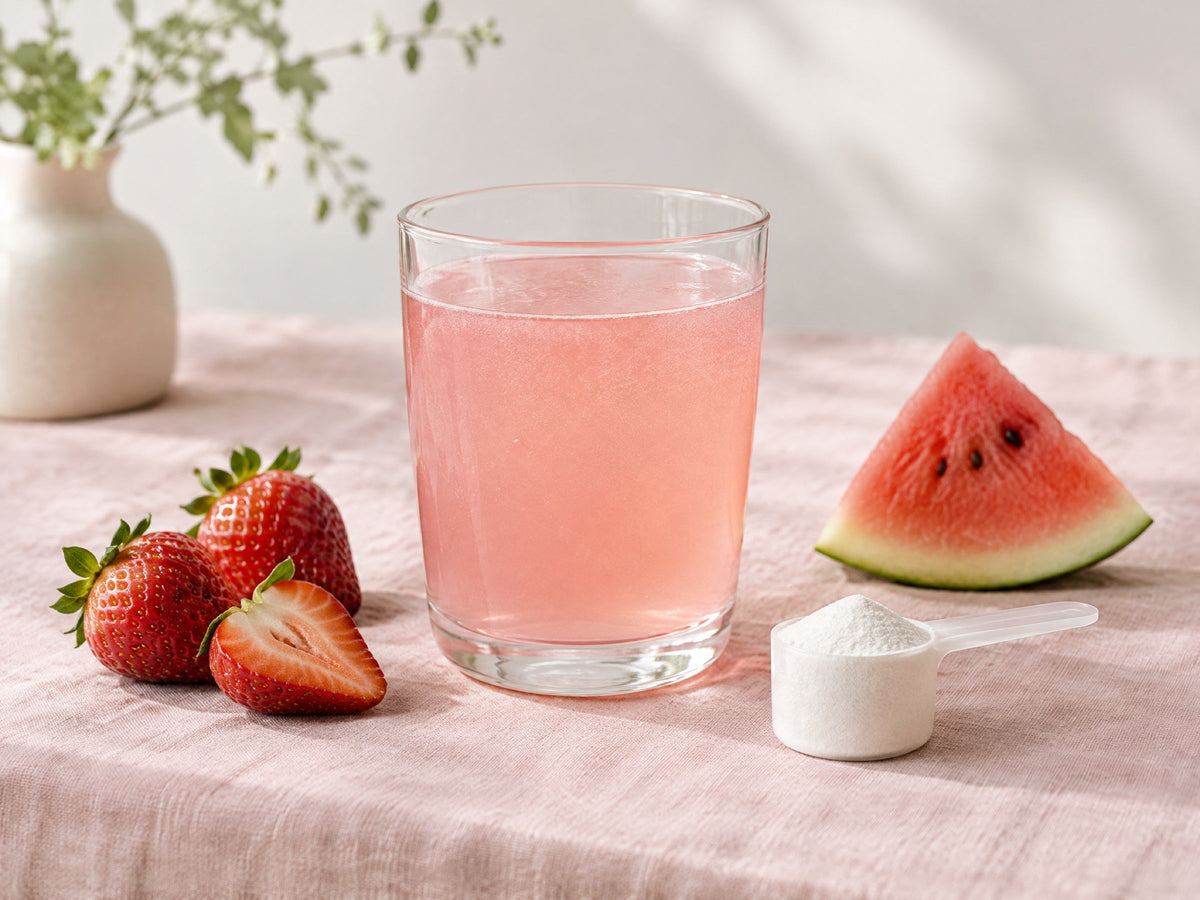
Every amount is listed on the label, and each batch is independently tested by Eurofins for heavy metals and pesticides, among other things. Mix one scoop into 250 ml of water for a Strawberry Watermelon flavour. No sixteen capsules, no separate tubs.
Want to know exactly what's in Glow+ and why we chose those amounts? Read What's in Glow+, and why these amounts?
It tastes good, but more importantly, my skin finally feels hydrated without constantly putting cream on. … I've literally never experienced that before.
Colette
Who is a collagen supplement for?
Collagen may appeal to adults who want to give their skin, hair and nails the right building blocks every day, without the fuss. Glow+ is made for adult women and men. In a few situations, it's best to ask for advice first or choose something else:
- You're vegetarian or vegan. Collagen comes from animals.
- You're pregnant, trying to conceive or breastfeeding. Speak to your doctor or midwife first.
- You take medication or other supplements. Ask your pharmacist if they're suitable to take together.
- You have an allergy. Always read the full ingredients list.
More about Glow+
Glow+ at a glance
- 8,000 mg of hydrolysed collagen with 500 mg of vitamin C
- Tested for heavy metals and pesticides, among other things
- More than 34,289 customers have tried it before you
- 90-day satisfaction guarantee on your first order
Frequently asked questions
What does collagen do in your body?
Collagen is a protein that gives strength to your skin, bones, tendons and cartilage. Your body makes it from amino acids. It also needs vitamin C to do that.
What happens to collagen when you take it?
Your body digests it like any other protein, breaking it into small pieces: amino acids and peptides. It absorbs these and uses them as building blocks where they're needed.
How much collagen should you take a day?
Most collagen powders provide between 2.5 and 10 grams a day. Glow+ contains 8 grams per scoop. Follow the recommended daily dose on the label.
Is fish collagen better than bovine collagen?
Both are mainly type I collagen. So it's mostly a matter of preference. If you have a fish allergy, don't choose fish collagen.
Does vegan collagen exist?
No. Collagen always comes from animals. Products labelled vegan collagen usually contain vitamins and plant extracts, but no collagen.
When is the best time to take collagen?
The time of day doesn't matter much. Pick a regular time that fits your day, such as breakfast. The important thing is to take it every day.
Can I put collagen in my coffee?
Yes, you can. Hydrolysed collagen dissolves in hot drinks too. Glow+ is made to dissolve in 250 ml of cold water: that's when the Strawberry Watermelon flavour tastes best, and you get a glass of water at the same time.
Can I take collagen with Clear+?
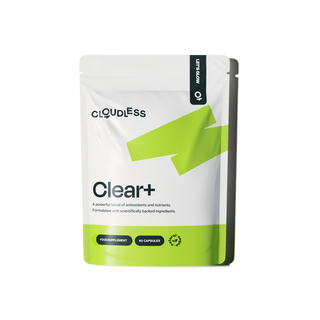
Yes. Many people use Glow+ and Clear+ together. Take the recommended daily dose of each: 1 scoop of Glow+ and 2 Clear+ capsules a day. Glow+ is intended for adults.
What if I'm not happy with it?
You'll get your money back. For your first order, use Glow+ every day for 90 days, then let us know within 10 days. Return all the packaging and you'll get your purchase price back, minus the cost of the return label. You can find all the terms in our refund policy.
This article is for general information and isn't medical advice. Glow+ is a food supplement. A food supplement isn't a substitute for a varied, balanced diet and a healthy lifestyle.
Sources
- European Commission. EU Register of nutrition and health claims made on foods. ec.europa.eu
- Voedingscentrum. Encyclopaedia: vitamin C. voedingscentrum.nl
- EFSA NDA Panel (2013). Scientific Opinion on Dietary Reference Values for vitamin C. EFSA Journal 11(11):3418.


 Excellent on Trustpilot

